
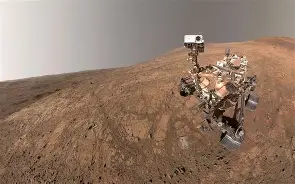
The car-sized rover reached the milestone while travelling through Jezero Crater, a region scientists believe once held a lake billions of years ago. This ancient landscape offers valuable clues about Mars’s geological history. Meanwhile, Perseverance continues its journey towards an area called Idubi, crossing terrain near the crater’s western rim. Scientists hope these locations will reveal more about the planet’s past environment.
With this achievement, Perseverance has surpassed NASA’s Opportunity rover, which travelled approximately 28.06 miles (45 kilometres) between 2004 and 2018. Both rovers have also exceeded the driving distances of vehicles sent to the Moon. However, Perseverance’s mission continues, and NASA engineers believe its systems could remain operational well into the 2030s.
One of the main reasons behind the rover’s success is its autonomous navigation system, known as AutoNav. According to NASA’s Jet Propulsion Laboratory, the system handles around 90 per cent of the rover’s driving without direct human intervention. It captures images of the terrain, creates a three-dimensional map and selects a safe route. As a result, Perseverance can travel more efficiently across the rough Martian surface.
Another important feature is its powerful onboard computer, which processes images and runs navigation software during drives. Unlike earlier rovers, Perseverance can make driving decisions quickly without frequent pauses. Furthermore, NASA continues to test its mobility systems to determine whether the rover can travel 62 miles or more. These tests could help engineers understand the limits of robotic exploration on Mars.
Beyond its driving record, Perseverance has made an important scientific discovery. The rover identified a potential biosignature in ancient reddish rock believed to be between 3.2 billion and 3.8 billion years old. Although the finding does not confirm past life, it offers scientists an important lead. Researchers are also studying areas that may have supported hydrothermal systems, where warm groundwater could have created conditions suitable for microbial life.
NASA initially planned for Perseverance to travel just 12.4 miles during its mission. However, its performance has exceeded expectations, prompting the agency to extend its exploration of the crater rim until around the end of 2028. With its power system performing as expected, the rover continues to examine Mars’s ancient terrain. Ultimately, its discoveries could help scientists better understand the planet’s history and whether life ever existed beyond Earth.