
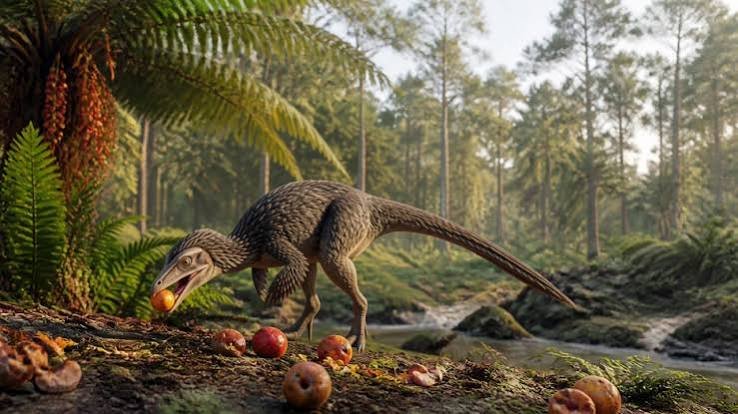
Scientists have discovered the first known dinosaur with clear adaptations for eating fruit. Named Infernogallus jamesi, the turkey-sized creature had a toothless, parrot-like head and specialised features for crushing soft plants. It lived around 66 million years ago, near the end of the Cretaceous Period. Researchers identified its fossils in Montana and North Dakota.
The name Infernogallus means “hell chicken”. It refers to the dinosaur’s bird-like appearance and the Hell Creek rock formation where scientists found its remains. The animal measured about five feet long and weighed roughly 25 pounds. Its fossils include a nearly complete skeleton and separate bones from the jaw and palate. Although researchers found no feathers, they believe the dinosaur had them based on evidence from related species.
Infernogallus lived in a subtropical coastal floodplain alongside dinosaurs such as Tyrannosaurus, Triceratops and Ankylosaurus. It belonged to the theropod group, which includes meat-eating dinosaurs and modern birds. However, some members of this group evolved plant-based diets. Researchers believe Infernogallus ate fruit and other soft vegetation.
Lead researcher Greg Funston of Stony Brook University said the discovery expands scientists’ understanding of dinosaur lifestyles. The study, published in Nature Communications, identifies three major adaptations linked to fruit consumption. These include jaw muscles that supported back-and-forth chewing, a flexible joint that allowed the jaw to slide forward, and ridges and grooves on the beak that helped crush soft food.
Researchers say these features resemble adaptations found separately in some modern birds and turtles. However, no living animal has all three features. Study co-author Thomas Dudgeon of the Royal Ontario Museum said scientists had previously suggested that some dinosaurs ate fruit, but lacked direct evidence. The discovery also highlights how flowering plants created new food sources during the Cretaceous Period.
Flowering plants first appeared around 130 to 140 million years ago. Over time, they spread across landscapes once dominated by plants such as conifers and ginkgoes. The fruit available to Infernogallus may have included berries and drupes, a group that includes peaches, cherries, mangoes and olives. Unlike many plant-eating theropods, which swallowed stones to grind food, this dinosaur appears to have chewed its meals.
Fruit-eating animals help flowering plants spread by dispersing their seeds. Funston suggested that caenagnathids, the dinosaur group to which Infernogallus belonged, may have helped spread large-seeded fruits. Mammals and birds also ate fruit during the Cretaceous, but their small size may have limited their ability to carry large seeds over long distances. Researchers say further evidence is needed to confirm the role these dinosaurs played in seed dispersal.