
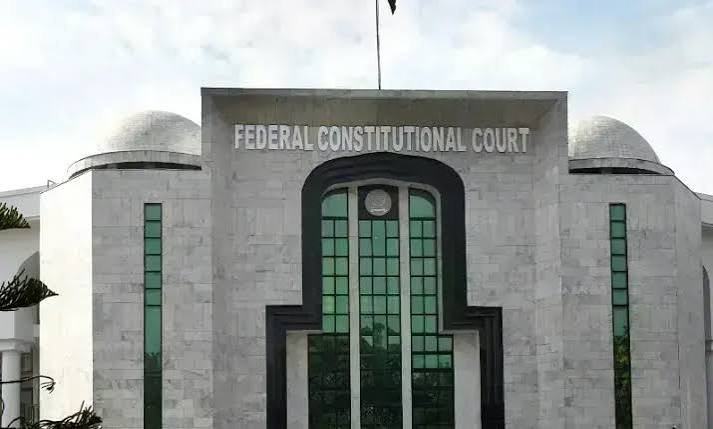
The Federal Constitutional Court (FCC) has criticised the Lahore Development Authority (LDA) over a property dispute. The case involves the family of Nishan-i-Haider recipient Pilot Officer Rashid Minhas Shaheed. Therefore, the court urged the authority to stop wasting public funds on frivolous litigation against individuals.
Justice Ali Baqar Najafi made these remarks in a judgment released on Tuesday. He said the LDA had prolonged the family’s suffering through repeated court proceedings. Meanwhile, Justice Najafi headed a three-member bench. Justices Rozi Khan Barrech and Syed Arshad Hussain Shah also joined him. The bench subsequently dismissed an appeal filed by the LDA director general.
The authority had challenged a Lahore High Court (LHC) ruling dated March 5, 2018. The ruling favoured Farooq Minhas, the martyred pilot’s real brother. Meanwhile, the dispute concerned a 14-marla plot in Gulberg-III, Lahore. A consent decree in Farooq Minhas’s favour was issued on May 7, 2005. However, the LDA challenged it during enforcement proceedings. The authority claimed that the plot was evacuee property.
The LDA said its predecessor, the Lahore Improvement Trust (LIT), had acquired the plot. It also claimed that the trust paid compensation to the custodian of evacuee property. Furthermore, the authority claimed possession on December 24, 1955. It cited acquisition notifications and an award issued in 1962. The LDA also challenged the family’s ownership documents. These included a 1976 sale deed and a property transfer document issued in 1966.
The FCC noted that several courts had already rejected the LDA’s objections. These included the executing court, revisional court and the LHC. Moreover, the court said the consent decree had become final. It also noted that the LDA had originally raised no objection. Consequently, the judges found that the authority’s objections under Order XXI of the Code of Civil Procedure exceeded the executing court’s scope.
The judgment also highlighted the lack of evidence supporting the LDA’s ownership claim. In particular, there was no proof of a federal transfer to the LIT. Nor was there evidence of compensation paid to the trust or custodian. Additionally, the court cited an August 17, 1980 decision by the Vigilance Commission. It required the LDA to honour verified transfer orders and collect only development charges. The authority had accepted that decision and issued relevant directions. Later, the Supreme Court dismissed the LDA’s challenge to the LHC ruling. It found no ownership rights in favour of the authority.
Finally, the FCC dismissed the appeal and refused leave to appeal. It declared the LDA’s case without merit. However, the court chose not to impose costs. Instead, Justice Najafi directed the LDA director general to protect public resources. He stressed that the authority must not waste public money on frivolous, vexatious or unnecessary litigation against individuals.