
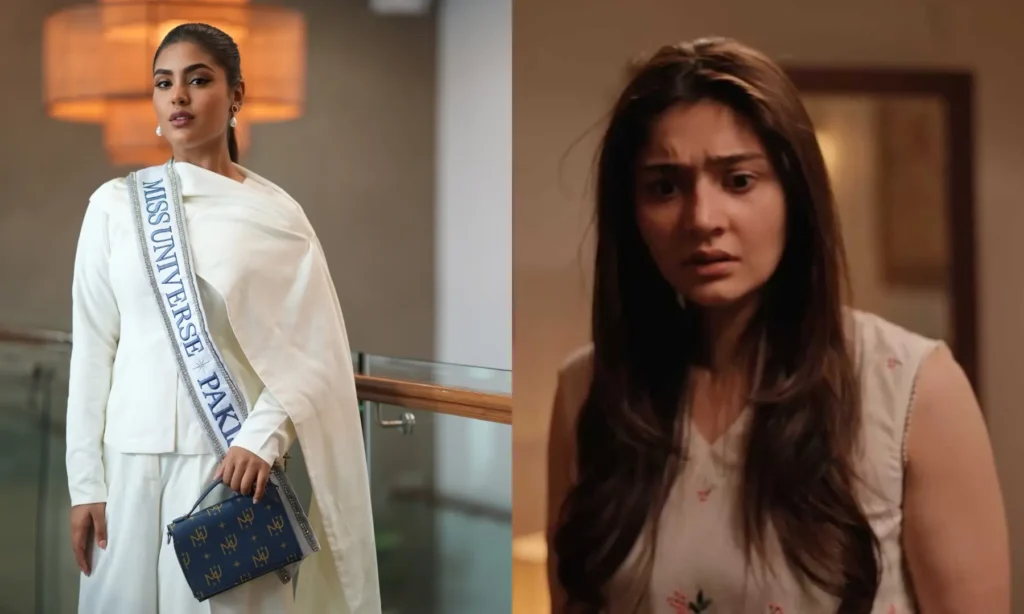
Pakistani actress Durefishan Saleem has received support from former Miss Universe Pakistan Roma Riaz after facing online body shaming over her appearance in the drama Dar-e-Nijaat. The incident has sparked debate about beauty standards and how people judge women in the entertainment industry.
Saleem plays Zaryab in the drama and has earned praise for her performance. However, some viewers recently focused on her physical appearance instead of her acting. Criticism increased after she wore a sleeveless dress in the drama’s 20th episode, drawing comments online.
Roma Riaz responded to the criticism through an Instagram story on Sunday. She expressed disappointment that people discussed Saleem’s arms instead of recognising her talent and hard work. Riaz said actors invest time and effort in their roles, yet online users often judge their appearance.
Riaz also criticised society’s approach to women’s empowerment. She highlighted how people encourage women to feel confident while judging their bodies against unrealistic beauty standards. Such pressure can make it difficult for women and girls to accept their natural appearance and feel comfortable with themselves.
The former beauty queen also spoke about the impact of these attitudes on younger generations. She hopes girls will understand that their value does not depend on meeting society’s beauty expectations. Her message encouraged people to show empathy, respect individual differences and avoid hurtful comments.
Saleem has previously discussed body shaming in interviews, highlighting an issue that continues to affect women in entertainment. Public figures often face criticism over their clothing, body shape and physical features. Social media can quickly spread such comments, exposing celebrities to widespread public scrutiny.
Body shaming can affect people beyond celebrities. Mocking an actor’s appearance may reinforce harmful ideas about beauty and body shape. The Durefishan Saleem body shaming debate highlights the importance of judging performers by their work rather than appearance and encouraging respectful conversations online.